A capsule collection rooted in Bosnia-Herzegovina’s literary archive transforms handwritten manuscripts into hats, scarves, and gloves — and puts cultural heritage back into everyday hands.
What if a scarf could carry a poem? That was the quiet, ambitious question at the heart of Threading Words into Wearables — a project that set out to reinterpret Bosnia-Herzegovina’s literary heritage through contemporary design and traditional craft, making centuries-old archival materials tangible, wearable, and alive.
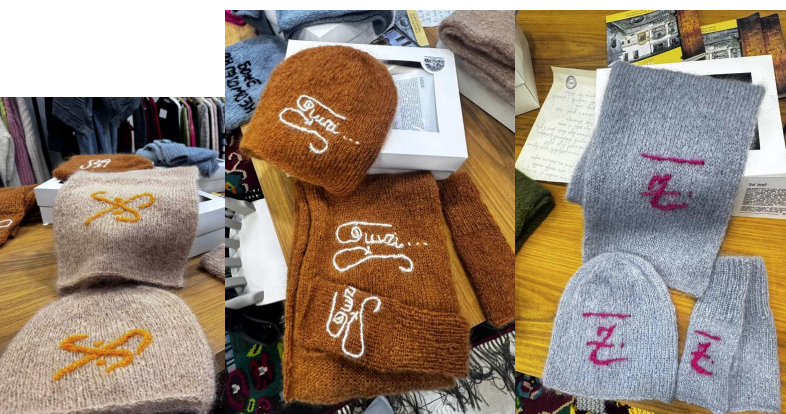
The project’s central goal was straightforward but rarely attempted: to translate archival manuscripts from the Museum’s collections into textile patterns, transforming static heritage into objects people could wear and carry with them every day. In doing so, it also created a meaningful collaboration with the social enterprise Udruzene, employing women artisans whose traditional handcraft skills became inseparable from the finished work.
The project began deep in the archive. Researchers identified and selected literary manuscripts with visual potential — texts whose form and texture could be translated into embroidery patterns and woven motifs. Selected materials were digitised and analysed, then passed to a collaborative design process involving curators and artisans. Not everything worked. Some manuscripts were too dense or technically complex to convert into clean textile patterns, requiring a revision of the initial selection. This adjustment extended the design phase slightly, but the project was ultimately delivered on schedule.
The production phase was carried out entirely by the women of Udruzene, using traditional handcraft techniques. Each of the 108 items — 36 hats, 36 scarves, and 36 pairs of gloves — was made by hand, ensuring consistency in quality while preserving the irreplaceable character of individually crafted objects. Literary fragments, refracted through centuries and craft, became something you could fold into a bag or pull over your head on a cold Sarajevo morning.
Feedback from participants and partners highlighted the value of the project in connecting cultural heritage with everyday life, and in providing visibility and economic opportunities for women artisans.
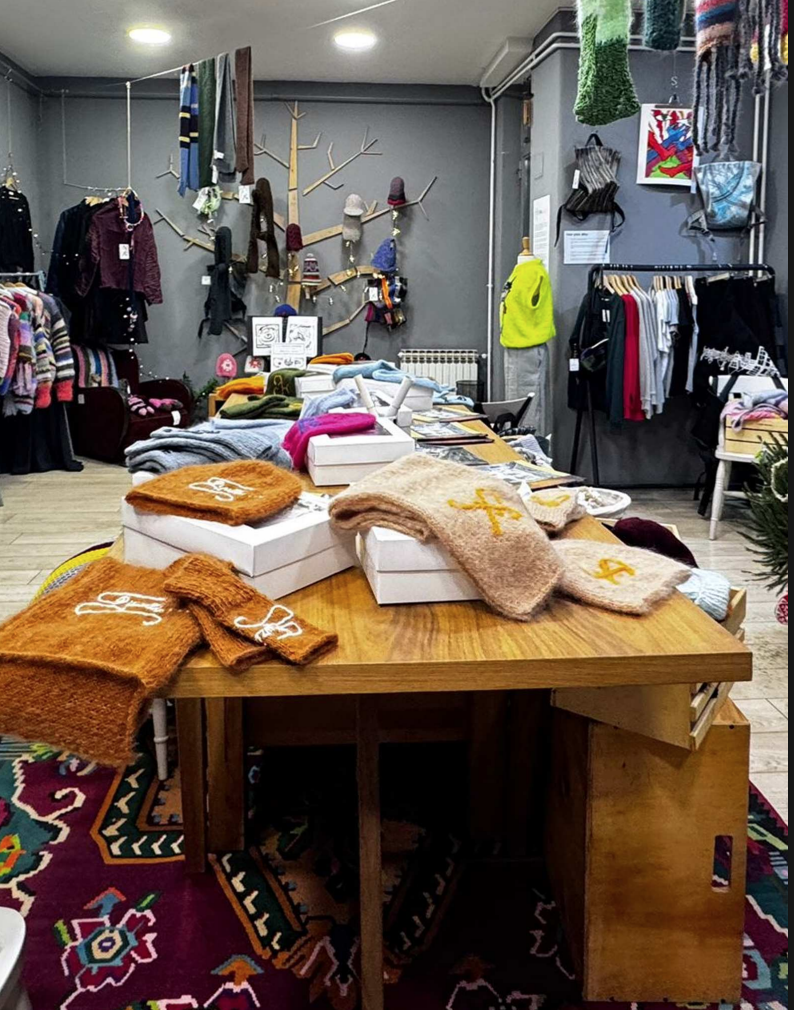
On 24 December 2025, the collection was officially introduced to the public at the Woolly Rouge store in Sarajevo. The choice of venue was itself a statement — rather than a traditional exhibition space, the team opted for a retail environment that allowed direct audience engagement and an immediate transition to distribution. The public could not only see the pieces, but take them home.
A structured social media and media outreach campaign supported the launch, reaching over 24,000 users and generating coverage that extended the project’s visibility well beyond the evening itself. The combination of digital and in-person engagement drew a broad and diverse audience, demonstrating genuine public appetite for heritage presented in new ways.
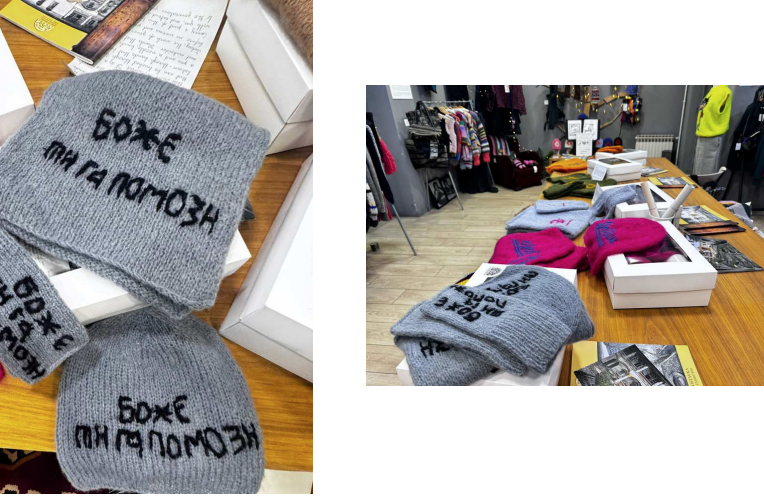
Beyond the 108 objects produced, the project’s most significant achievement may be its structural one: it established a working model for cooperation between a cultural institution and a social enterprise, one that integrates archival research, contemporary design, and traditional craft into a single coherent process. That model is replicable. Future initiatives can draw on this collaboration between the Museum and Udruzene as a template for making heritage economically active — and for ensuring that the people who produce it are paid and recognised for their work.
The project contributed to the preservation and reinterpretation of cultural heritage, strengthened institutional partnerships, and created new modes of audience engagement with archival materials. Its impact is reflected not only in enhanced visibility for the Museum’s collections, but in the empowerment of women artisans through paid work — and in the quiet proof that a scarf can, in fact, carry a poem.