Rethinking Inclusion: AI in the GLAM Sector
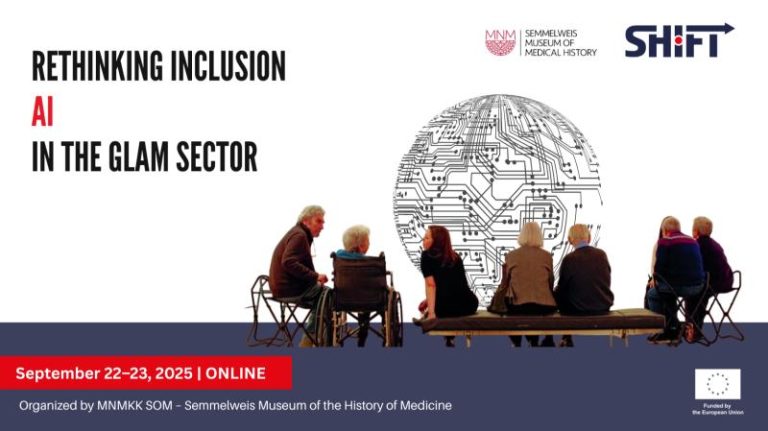
The SHIFT Horizon Europe project concluded with a two-day closing conference “Rethinking Inclusion: AI in the GLAM Sector” on 22-23 September 2025. This online event was designed to bring together cultural professionals, researchers, technologists, and disability advocates. The conference explored how artificial intelligence (AI) and digital technologies can drive greater

Continue reading

Enhancing Accessibility Through Multisensory AI Experiences

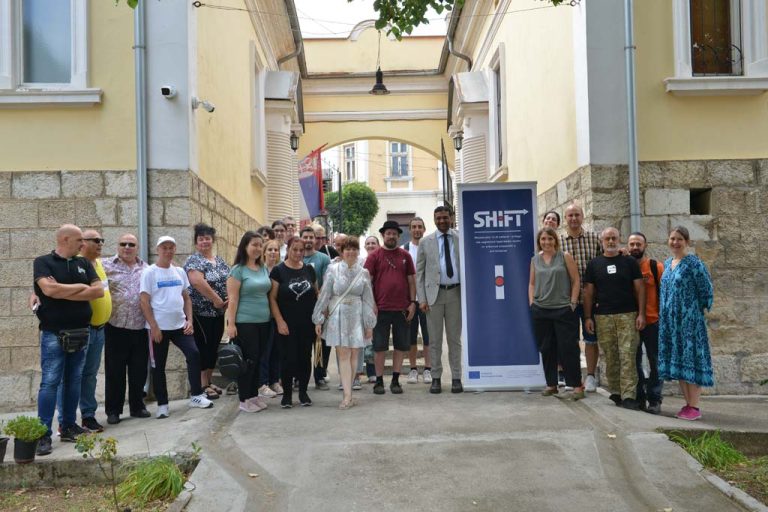
BMN Pilot at the Homeland Museum of Knjaževac, Serbia – July 30, 2025 On July 30, 2025, the Homeland Museum of Knjaževac in Serbia became a hub of innovation, accessibility, and inclusion. As part of the SHIFT project, the Balkan Museum Network (BMN) organized a pilot event that demonstrated how

Continue reading

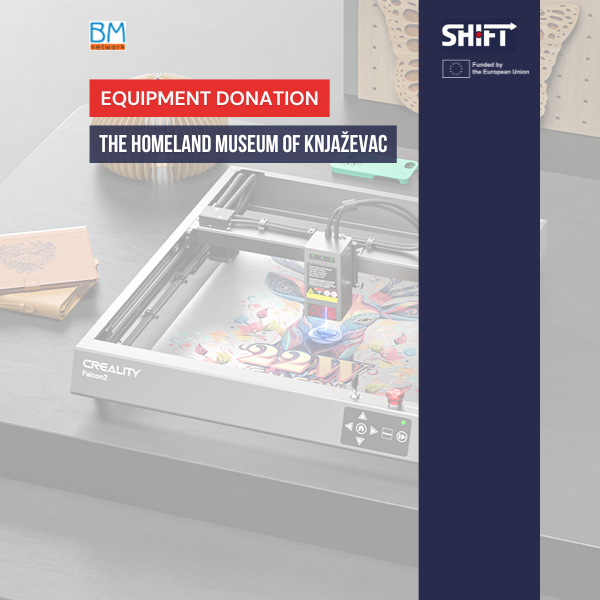
Expanding Inclusion and Innovation at the Homeland Museum of Knjaževac with New Technology

The Homeland Museum of Knjaževac is redefining its role in the 21st century by integrating advanced technologies into its institutional practice, with a clear focus on accessibility, inclusion, and long-term sustainability. Through the SHIFT project—supported by the European Union’s Horizon 2020 programme and implemented by the Balkan Museum Network—as a

Continue reading

Advancing Digital Heritage Practices: A Review of the Webinar “Advantages of Sharing Your Collection Online”

On 18 June 2025, the SHIFT initiative hosted one of its expert-led webinars titled “Advantages of Sharing Your Collection Online”, presented by Maria Teresa Natale, senior project manager at the Michael Culture Association (MCA) and coordinator of MUSEU-HUB. This session offered valuable insights into the strategic, technical, and practical aspects

Continue reading

Webinar: Advantages of sharing your collection online, Maria Teresa Natale

Join us on 18th June, from 1:30 to 3:00 p.m. CET. Besides understanding the benefits of sharing cultural heritage collections online, you will listen about a specific use-case: sharing your collections on Europeana Initiative portal. In particular you will: Learn about metadata and the Europeana Data  Model (EDM), the metadata

Continue reading

Report from the webinar: Monetization and Cost Management of Digital Assets in GLAM Institutions: A Strategic Approach to Sustainability

The growing reliance on digital technologies in the cultural sector has significantly transformed the operational, financial, and strategic dimensions of Galleries, Libraries, Archives, and Museums (GLAMs). The webinar Monetization and Costs of Digital Assets in GLAMs, held on 10 April 2025 within the Horizon Europe SHIFT initiative, addressed these shifts

Continue reading

Call for applications: webinar Monetization and costs of digital assets in GLAMS

Join us in discussing monetization and costs of digital assets in GLAMS in an engaging webinar on 10 April 2025 at 14 CET  (online). This webinar explores the importance of digital assets in GLAMs (Galleries, Libraries, Archives, and Museums), focusing on their financial management, funding strategies, and cost optimization. It

Continue reading

Webinar Series – Part 2 Speakers

Who Are the Speakers of Part 2 of the Webinar Series? INCLUSION IN MUSEUMS: PRESENTATION OF BEST PRACTICES In an era where cultural institutions are becoming more inclusive, this webinar offers a unique opportunity to hear from experts who are leading the charge in making museums more accessible for all

Continue reading

Using AI digital tools – Fill in the questionnaire

We invite you to take part in the SHIFT questionnaire. Your input will help shape strategies that support greater accessibility, audience engagement, and financial sustainability for heritage institutions, with a particular focus on BMN member museums and the European GLAM sector. This is your opportunity to contribute to the future

Continue reading

Reimagining Cultural Heritage through 3D Digitization and Gamification

As digital technologies continue to reshape our relationship with history and place, cultural institutions across Europe are increasingly exploring new tools that allow them not only to preserve but also to dynamically reinterpret and communicate their heritage. Within this context, the Horizon Europe SHIFT project hosted a timely and thought-provoking

Continue reading