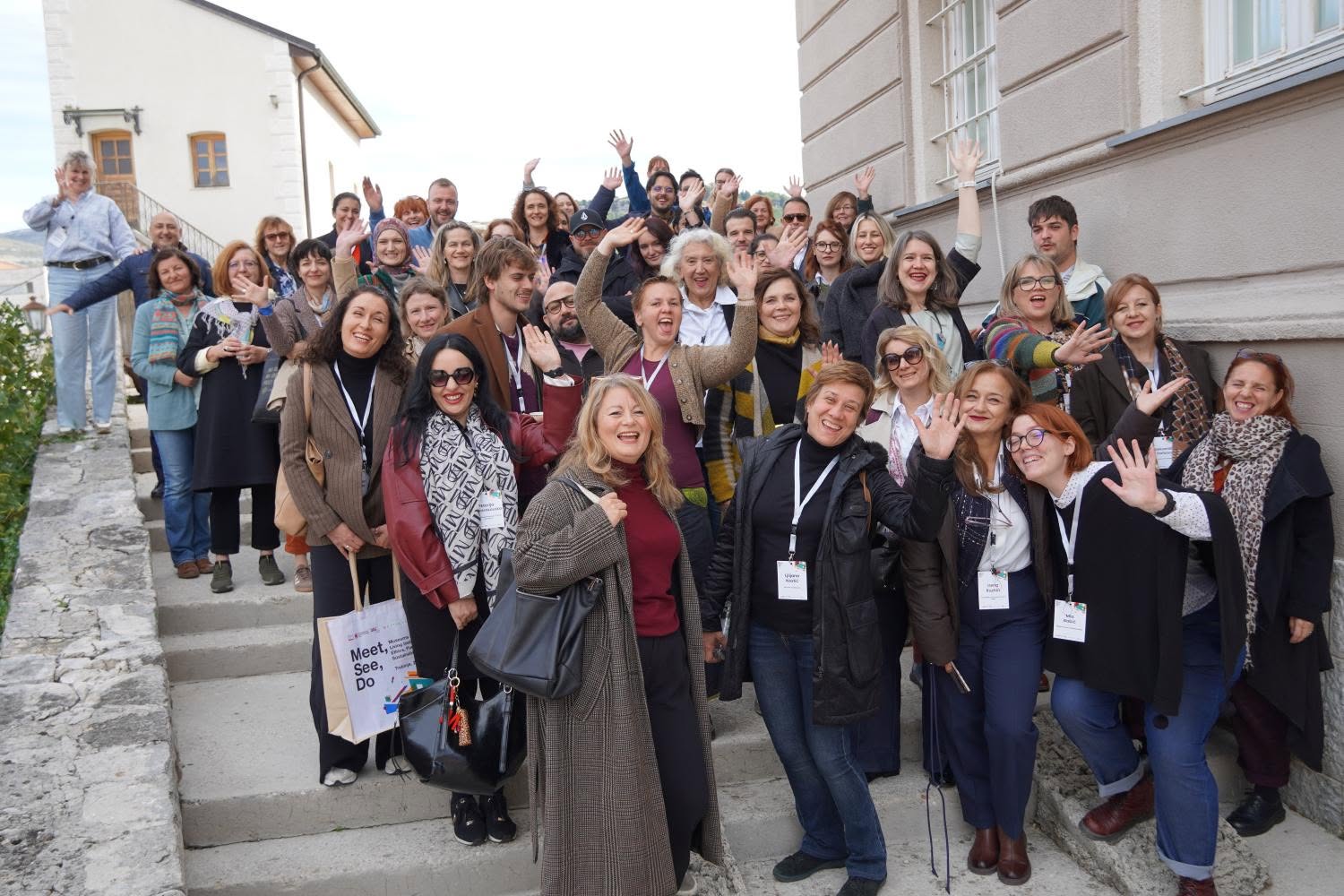
The tenth edition of the Balkan Museum Network’s conference brought museum professionals to the Museum of Herzegovina on 28–29 October to discuss participation, sustainability, care and ethics.
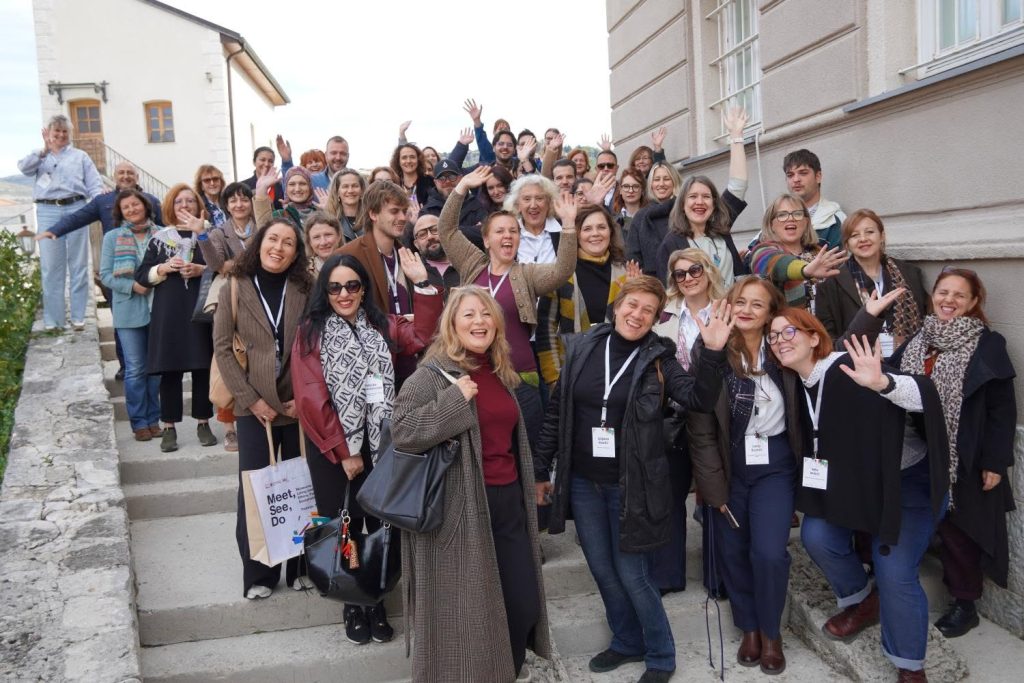
The driving idea behind “Meet, See, Do”, which began in 2013, was that museum professionals in the Balkans learn best from each other, by exchanging their experiences and practical insights. This year’s tenth edition took place at the Museum of Herzegovina in Trebinje under the theme Museums as Living Institutions: Ethics, Participation, Sustainability & Care, with 88 registered participants from the Balkans and across Europe.
The MSD’s format is deliberately different from that of a conventional conference. Participation is free and open through an international call, and the programme is co-created: the Balkan Museum Network (BMN) proposes themes, and colleagues from the region respond with workshops, presentations and other participatory formats.
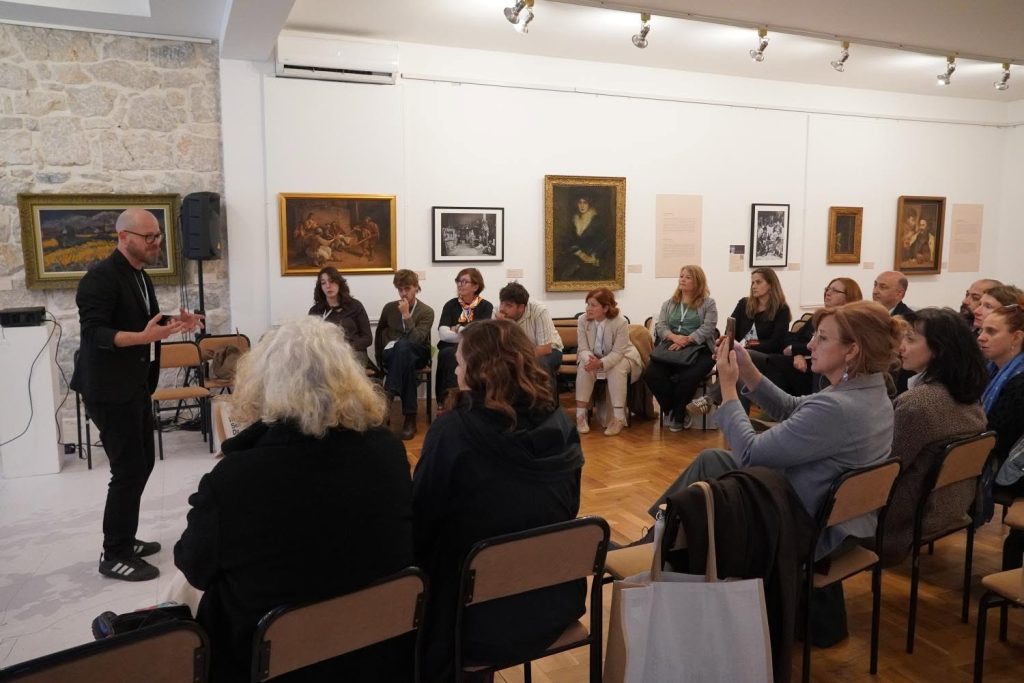
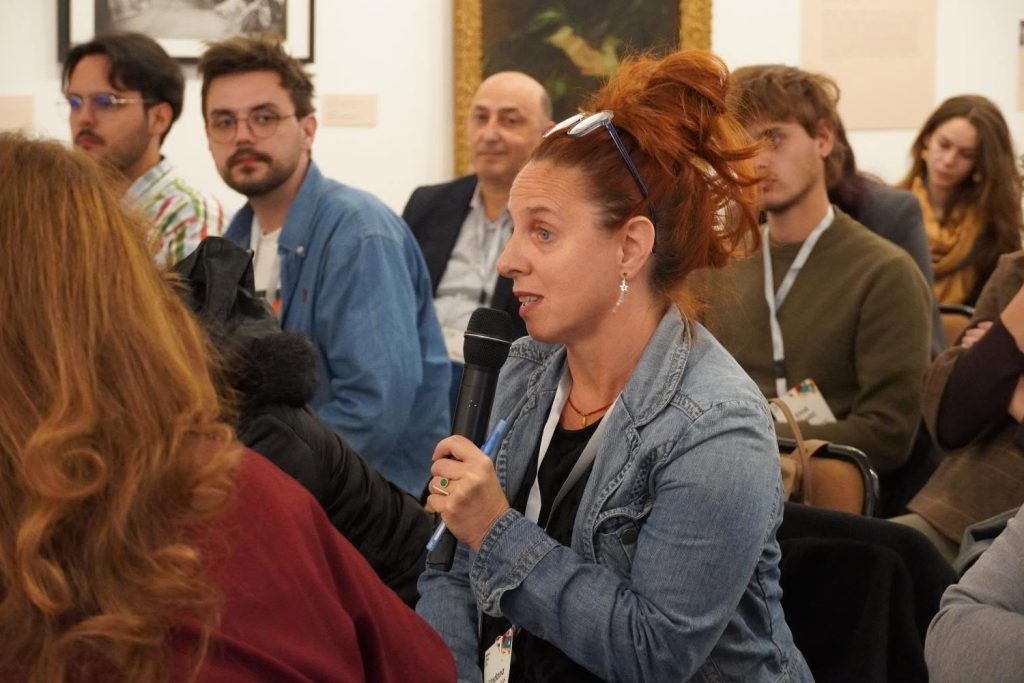
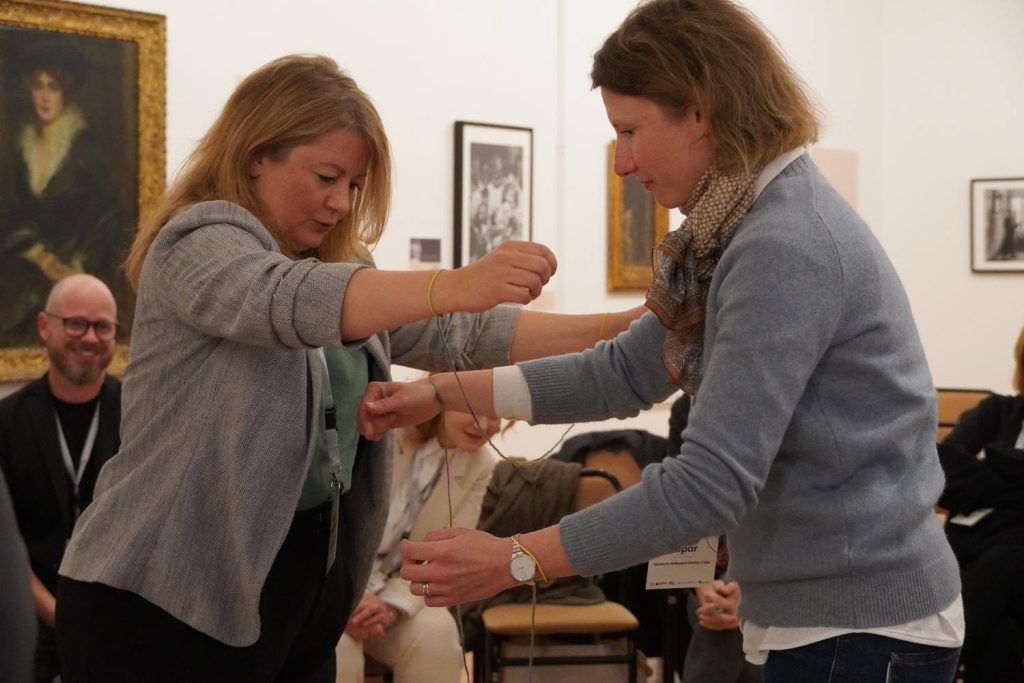
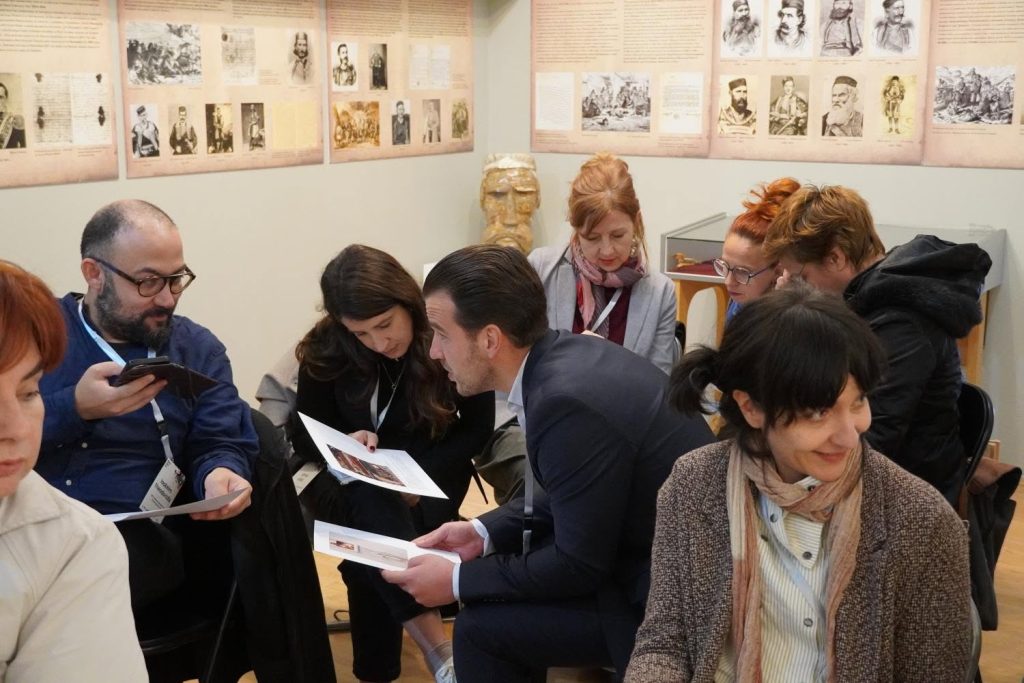
Day 1 (28 Oct 2026)
Keynote: Whose Museum? Participation, Authority and Broken Promises
The conference opened with Lidija Nikočević, ethnologist and long-time director of the Ethnographic Museum of Istria, now a freelance expert and consultant. She set out the main currents of the last thirty years: critical museology, which asks who decides what is collected and whose voice is heard; the new museology’s focus on community and local identity; the participatory museum, where visitors co-author content; experiential interpretation; and the extension of heritage to intangible practices after UNESCO’s 2003 Convention.
She then tested these ideas against Croatian practice. The Ethnographic Museum of Istria’s semi-permanent exhibition presents the region through 11 occupations and life situations. It took ten years to complete, partly because of funding and staff changes. Each character was developed by a curator tasked with connecting the museum to a different Istrian community, so the outcomes varied. After a change in the museum’s leadership, the exhibition has been made permanent.
A second example was the Connections exhibition on Istrians after the Second World War, created within the Creative Europe project Identity on the Line. It dealt with displacement, the exodus of indigenous Italians and the multi-generational trauma of emigrants and non-emigrants. The challenges she named were related to the following issues (1) Some associations of exiled Istrians were reluctant to collaborate, seeing themselves as custodians of how the exodus is interpreted; (2) Some political bodies are unsympathetic to such projects, which therefore often need international support; (3) When the EU funding ended, people who wanted to continue collaborating could not, for lack of money.
Her third case was the House of the Halubje Bell Ringers in Viškovo, a visitors’ centre linked to a practice on UNESCO’s intangible heritage list. She contrasted a classical approach (the expert defines the story, the community is a source of information, success means attendance) with a collaborative one (the story is built together, the community is a partner and co-author, success means community well-being and control over heritage). She listed the advantages of visitor centres, including protecting sensitive customs, boosting local development and easier renewal of content. She also listed the risks such as costs after project funding ends, over-optimistic visitor forecasts, dependence on technology, a lack of qualified staff, and creators and community members losing influence once a centre opens.
Panel 1: Heritage education, formal and informal
The first panel brought together three speakers, with Tatjana Cvjetićanin facilitating.
Ivana Živaljević (University of Novi Sad) spoke about mutual learning between museology and heritage education. She said museology has been taught at her faculty since 1978, and has been compulsory for students of culturology since 2023. She pointed to the challenge and potential of students from different disciplines learning together, and to nine BA theses in museology or cultural heritage between 2024 and 2026. Topics included participation in multicultural Vojvodina, the ethics of repatriation, and authentic experience versus digital reproduction.
Željka Miklošević (University of Zagreb) spoke about moving from heritage as a source to heritage as a resource. She asked what changes when heritage is used not only to learn about the past but to understand the world, reflect on current issues and negotiate meanings. She gave examples including the KHM Stories app at Vienna’s Kunsthistorisches Museum and the debate around the monumentalism of Ivan Meštrović’s sculpture. Her third example was a participatory exhibition on product design heritage at the Museum of Arts and Crafts in Zagreb. She also asked what happens to professional education when disciplinary expertise is no longer the main authority on meaning. Her conclusions centred on participation, community and resilience.
Amra Hadžimuhamedović (HIDR – Center for Peace and Heritage) framed heritage education through the idea of epistemic violence, asking whose knowledge counts. She named risks including authorised heritage discourse, tokenised participation and extraction without reciprocity. As an alternative she proposed cognitive justice and “Heritage Wisdom”, an ecology of living knowledge. She also applied strategic foresight to heritage education, using a three-horizons model that moves from inherited authority and token participation towards shared inquiry and plural knowledge ecologies. The slides also raised the skills gap between formal education and what heritage professionals need, and the labour-market challenges faced by both recent graduates and experienced professionals.
Parallel workshops
The morning workshops, as described in the booklet:
- Exhibiting Intimate and Gendered Experiences (Urška Repar and Tijana Jakovljević Šević) examined interpretation, ethics and care through the exhibitions Be(com)ing a Woman (Celje) and Birth Culture (Fürth).
- Design With, Not For (Antonia Silvaggi had teams redesign a real museum touchpoint with the EFURM and Design for Difference neuroinclusion toolkits.
- Removing Barriers (Irena Ruzhin) drew on a decade of Balkan Museum Access Group experience to plan accessible activities for disabled communities.
In the afternoon:
- Museum for Peace (Uroš Dokl and Aja Barbič) showed how authentic objects, photographs and documents can spark discussion on war, discrimination and human rights.
- From Broke to Built (Kay Nag) focused on matching cultural projects to EU, private and UN funding.
- Beyond Touch (Tudor Scripor) introduced the Scripor Alphabet, a tactile colour code that gives blind and visually impaired visitors access to colour.
Panel 2: Catalysts of heritage activation
The day closed with three projects supported by the Headley Southeast European Cultural Heritage Fund, facilitated by Aida Vežić. The fund continues BMN’s small grants scheme in partnership with the Headley Trust UK. In the last three years, 22 projects have been supported across three open calls. The need in the region is so vast that the fund can support fewer than 10% of applicants that submit a proposal each year for the open call.
- Aida Šarac Berbić presented a project using Bogdan Bogdanović’s Yugoslav anti-fascist monuments as didactic material across Western Balkan museums. She described Bogdanović as an architect and writer who drew on ancient and neolithic symbols rather than traditionalist or modernist styles. She used the Mostar Partisan Cemetery (1965) as an example of Bogdanović’s work that residents remember as a park and a place for picnics, and some say they learned to swim in its pond. She also showed the exhibition Večito at the Homeland Museum in Leskovac and presented other project activities in North Macedonia and Croatia.
- Monika Milosavljević explained why Bileća needs a virtual museum as it is the town that has a museum building but no institution, and a lapidarium of displaced Roman monuments and medieval stećci. The virtual platform that was built with the project is a starting point, not a replacement for a museum. Locals and experts worked together through an exhibition, a panel on heritage and development, three open-door discussions, and a workshop series called “Our stories and heritage”. She invited everyone to explore the Virtual Museum of Bileća.
- Nemanja Pavlović presented “Let’s Not Grind the Past”, which documented the last surviving watermill in Senokos on Stara Planina, where 26 watermills once operated. The project combined photogrammetry and 3D modelling, ethnographic fieldwork and oral histories, and a field school with 26 students. The 3D model was delivered to the Institute for Cultural Heritage Protection in Niš. The project will result with an exhibition, interpretive panels and a heritage trail among the results.
Day 2 (29 Oct 2026)
Keynote: Museum chronoscopes
Sandro Debono of NEMO (Network of European Museum Organisations) argued that museums are opening up to futures thinking, as futures are part of the sector’s mandate and are referenced in codes of ethics, conventions and other frameworks. The real friction, he said, lies in everyday work, where every decision points to a range of possible futures. Resolving it may mean revising long-standing policies and metrics, and transforming museology itself.
Instead of the time-machine metaphor, he proposed the museum chronoscope, a lens for viewing the present from a future point in time. Most museums already own at least one, he suggested, and that is the humble accession form, where provenance, significance and care are quiet claims about the future. The challenge is to develop an anticipatory museology that brings futures thinking into everyday practice. In his words, it would help us see that we are already making the future, and the chronoscope would show how.
Panel 3: From neutrality to ethical complexity
Lina G. Tahan (Chair), Cvetanka Vuchkovska-Mitovska (Secretary) and Andrea Kieskamp (Treasurer) of ICOM’s International Committee on Ethical Dilemmas (ICEthics) presented their work. They opened by challenging the myth of museum neutrality that presents museums as only collecting and displaying but are never value-free, and every curatorial choice elevates some narratives and leaves others unheard.
The speakers listed six areas of contemporary dilemma: (1) decolonisation, provenance and restitution; (2) sponsorship, philanthropy and institutional independence; (3) diversity, equity, accessibility and inclusion; (4) artificial intelligence, privacy and cultural representation; (5) staff wellbeing and professional vulnerability; (6) burnout, mental health and psychological safety.
Because ethical dilemmas rarely have simple, universal answers, ICEthics offers a non-punitive forum for peer exchange rather than adjudication. Its Ethics Meeting Room is a regular space for thematic discussion of difficult cases, which helps reduce the isolation of ethical decision-making. The committee also described a shift from compliance (“are we following the rules?”) to reflexivity (“whose interests and voices shape our decisions?”). Codes remain essential, but ethical practice requires continued questioning. Their closing recommendations were to listen to communities and colleagues, make tensions visible, share experience across borders and treat ethical reflection as ongoing professional practice.
Parallel workshops
- How to Fix an Outdated Exhibit (Vessela Gertcheva and Angela Pencheva) discussed with the participants several affordable strategies, costlier approach to renewing an exhibition.
- The Symbolism of Yugoslavian Spomeniks (Aida Šarac Berbić) used the Visual Thinking Strategy method to interpret Bogdanović’s monuments and the culture of remembrance in Yugoslavia.
- I Don’t Know What It’s For, and It Doesn’t Even Work (Slađana Velendečić and Aleksandra Stefanov) turned unidentified objects into a method for interpretation and storytelling, as well as educational museum activities..
The afternoon workshops:
- Night of Fortresses (Simo Radić and Đurđa Vrljević Šarić) introduced the annual European initiative, which also runs at the Museum of Herzegovina in Trebinje.
- When the Public Enters the Museum Archive (Elma Fišić) explored open-depot practice and the ethics of public access to storage.
- From How to Why (Arman Džaferagić) discussed elements of ethical decision-making in heritage digitisation introducing the terms such as paradata and dilemmas around storage and other processes.
The programme closed with a presentation from the Balkan Heritage Foundation, Cultural Heritage without Borders in Bosnia and Herzegovina, and announcements from BMN.
The participants had an opportunity for a guided tour of the host museum.
The sessions kept returning to the same questions: who a museum belongs to, whose knowledge counts, and how to act responsibly with limited resources. Participation was a recurring theme, both as an aspiration and as something that fails when funding or leadership changes.