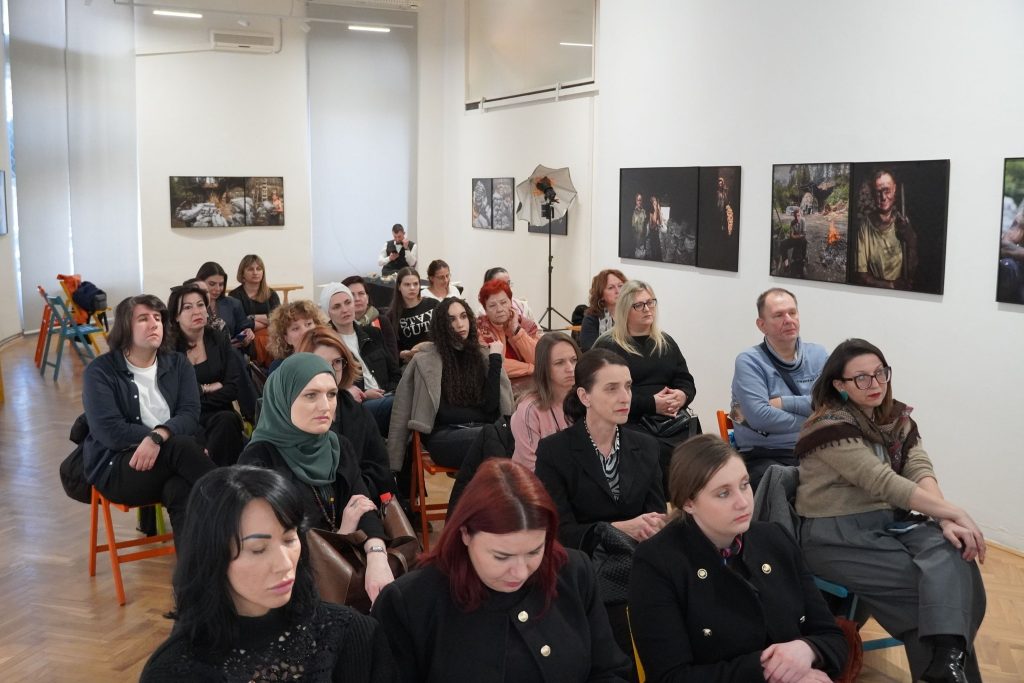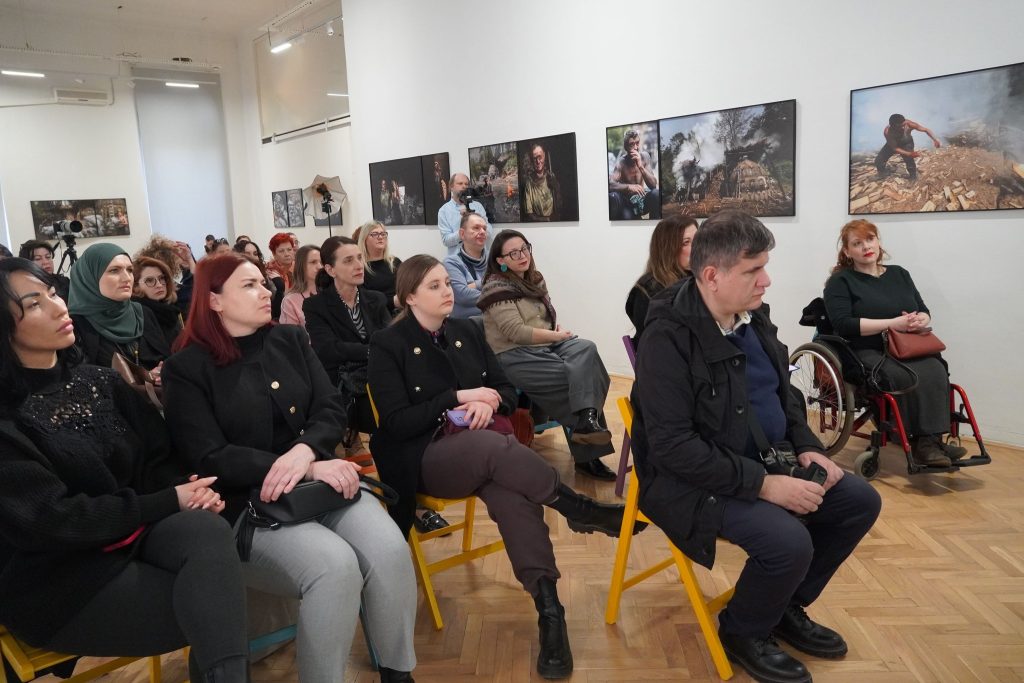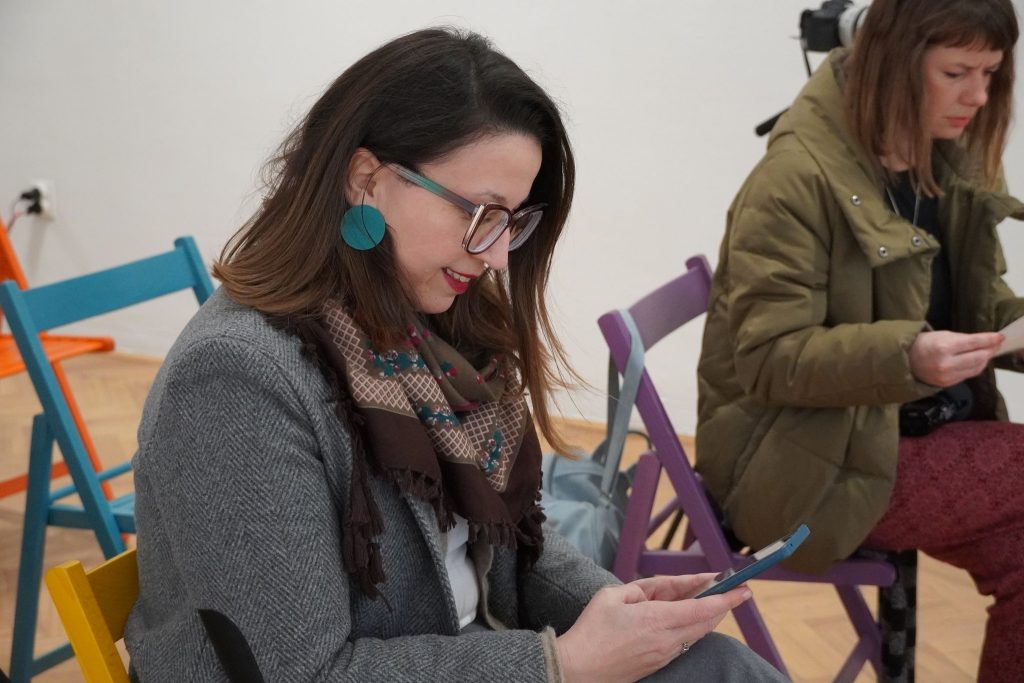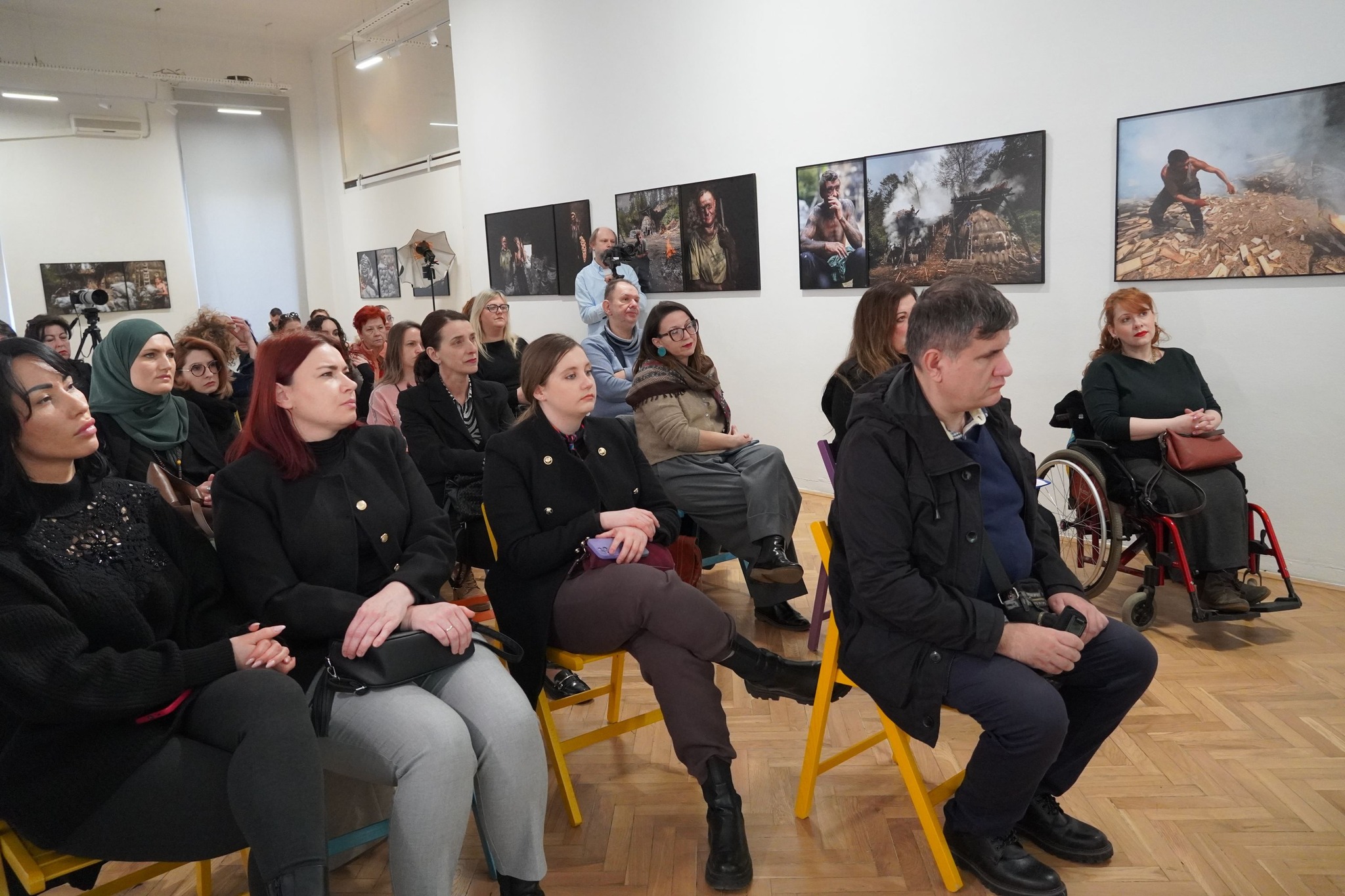
On February 12, 2026, the Balkan Museum Network organized an iNCLUSION project Info Day, hosted by the National Gallery of Bosnia and Herzegovina.
The event brought together over 30 heritage professionals, educators, representatives of higher education institutions, disability associations and other stakeholders to explore how institutions can better serve disabled audiences.
Following the press statements, the attendees were welcomed by the Gallery’s Director, Strajo Krsmanović, who used his opening address to emphasize the importance of institutional commitment to inclusive cultural participation.
Aida Vežić, BMN’s Secretary General, introduced the iNCLUSION project, highlighting its broader significance and role in equipping higher-education students with the skills to design transformative cultural experiences for disabled persons.
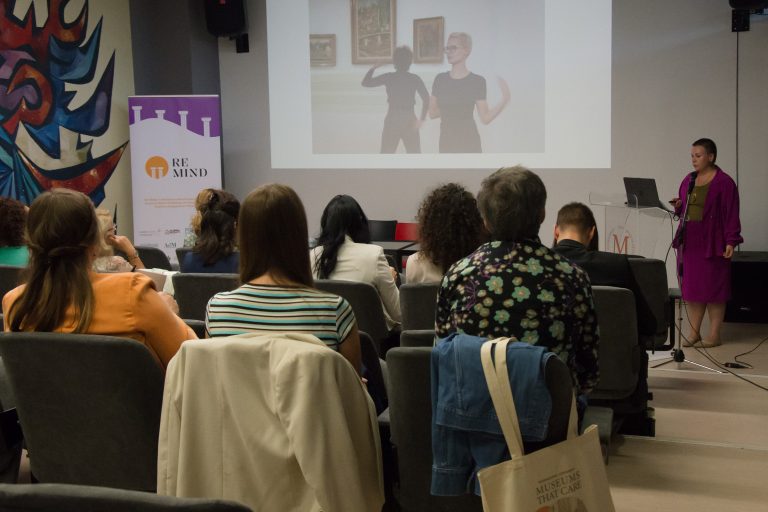
The main part of the event opened with a presentation of the iNCLUSION project results, delivered by Aida Šarac Berbić, Museum Educator at the National Gallery of BiH.
Šarac Berbić examined the key findings pertaining to the gaps in knowledge, attitudes, and practical skills related to accessibility and inclusion among cultural workers and in the cultural institutions.
The research scope also encompassed the perspectives and lived experiences of disabled people, including the most common barriers they face, their familiarity with accessible materials and programs in museums, and awareness of their cultural rights.
Merima Sorguč, an art historian and a disability rights advocate noted on the occasion:
When digital tools are created based on conversations with disabled persons, as in this case, that means they are not an afterthought; they are rooted in a lived experience. I see this type of materials as a bridge for many who would otherwise remain outside of cultural life. The moment inclusive materials and tools become part of the general cultural offering, the society’s very perception of accessibility, diversity, and belonging will also begin to change in a profound way.
The attendees had the opportunity to explore such very resources, in the form of an e-book. Journey through Bosnian and Herzegovinian Art, one of the five e-books developed as part of the iNCLUSION project, features eight renowned artworks from the National Gallery of BiH and the Gallery of Portraits Tuzla.
It includes audio narration, sign-language translation, animations and video content, and texts written in easy-to-read language, which are accompanied with the dictionary and alternative descriptions.
The interactive multimedia demonstration was followed by an open dialogue among practitioners, educators, and advocates, who welcomed the new materials and praised their practical value, while acknowledging the ongoing challenges in building sustainable dialogue between institutions and communities.
The gathering concluded with informal networking, reinforcing collaboration and shared commitment to advancing accessibility within the cultural sector.
Events like these serve as an important reminder that improving accessibility requires continuous effort toward opening up cultural spaces to different ways of perceiving the world, as well as cultivating stronger bonds between cultural workers, institutions, and audiences.