HERIe Platform Workshop – Sarajevo, April 2026
Preventive Conservation · Workshop Report
A two-day international workshop at the National Museum of Bosnia and Herzegovina introduced 20 conservation professionals from seven countries to a powerful digital tool for safeguarding cultural heritage.
Date: 22–23 April 2026
Venue: National Museum of BiH, Sarajevo
Organised by: GoGreen Consortium & Balkan Museum Network
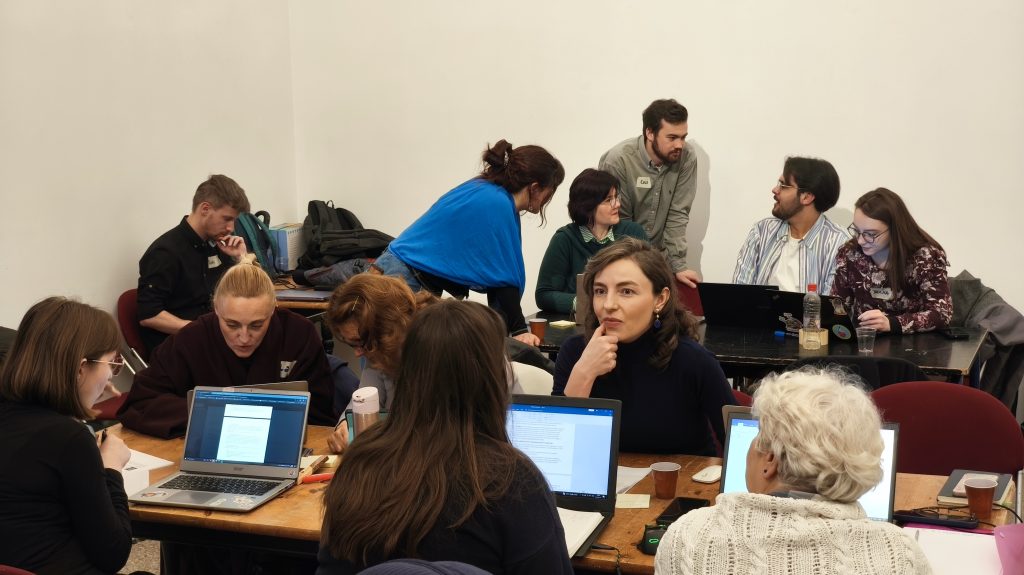
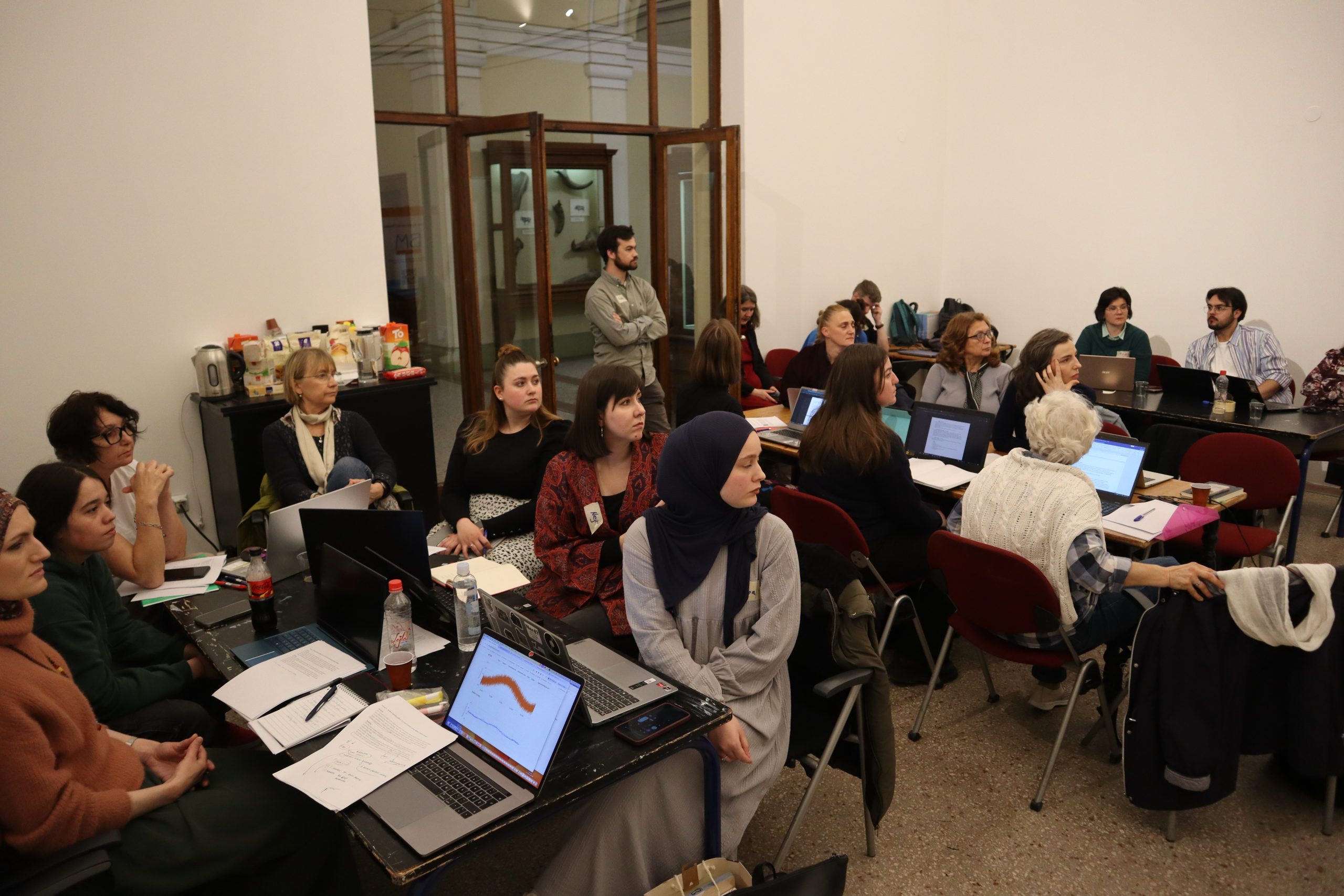
For the first time in Southeast Europe, the HERIe digital preventive conservation platform was presented in a dedicated hands-on workshop, bringing together museum professionals, conservators, and educators from across the region — and beyond — under the historic roof of the National Museum of Bosnia and Herzegovina.
About the HERIe Platform
HERIe is a free, web-based decision-support platform developed under the GoGreen project, in collaboration with the Getty Conservation Institute, the Canadian Conservation Institute, English Heritage, and University College London. It provides conservators and museum professionals with remote access to data manipulation tools and quantitative risk assessments for heritage assets.
The platform currently serves more than 3,100 users across 50 countries, making it one of the most widely adopted digital tools in the field of preventive conservation. Its core strength lies in translating complex scientific models into intuitive visual outputs — allowing professionals to see, for instance, the projected colour degradation of a textile or painting over 50, 100, or 500 years under various environmental conditions.
Workshop Programme
Led by Professor Łukasz Bratasz, the platform’s creator, and colleagues from the Polish Academy of Sciences, the two-day programme combined short theoretical introductions with intensive hands-on exercises. Each session addressed a specific module of the HERIe platform, grounding the methodology in concrete, real-world case studies.
Topics of the workshop were:
- Platform concept, structure & data upload
- ASHRAE Chapter 24 climate classification
- Showcase tool: relative humidity control
- Impact tool: gaseous pollutants & NOx modelling
- Light damage calculator (LDC1)
- Mechanical damage tool
- Fire risk tool (Tétreault method)
- Chemical degradation tool
- Advanced light damage: Yale Centre of British Art case
- Integrated fire risk & chemical degradation decisions
- Climate control strategy design
- Feedback and next steps
A Platform for Real Decisions
Participants worked through scenarios drawn from real collections and institutions — from assessing fire risk in energy-efficient storage facilities in Denmark and Poland, to developing long-term lighting policies for sensitive prints, to determining the optimal climate conditions for panel paintings undergoing conservation. Role-playing exercises on Day Two placed participants in the position of directors, conservation heads, and curators, prompting them to weigh scientific evidence against institutional constraints and resource realities.
Voices from the Workshop
“The workshop at the National Museum, which introduced the HERIe platform, is fully in line with the mission of the Balkan Museum Network. It offered participants new understandings and skills that will help improve future work in preventive conservation. I am very happy that we had colleagues from so many countries and institutions who will continue to collaborate in the future.” Aida Vežić, Secretary General, Balkan Museum Network
“As Deputy Director of the National Museum of Bosnia and Herzegovina and a conservator, I am truly proud and delighted that we had the opportunity to host this preventive conservation workshop at our Museum. Preventive conservation is one of the most important aspects of museum work, and I hope that all participants had the chance not only to deepen their knowledge, but also to connect with one another, fostering communication and building professional networks. This exchange and collaboration are often the most valuable outcomes of such educational programmes.” Azra Bečević Šarenkapa, Deputy Director & Senior Conservator, National Museum of Bosnia and Herzegovina
“Participating in the HERIe workshop, in the wonderful setting of the National Museum in Sarajevo, was an exceptionally valuable experience. The platform shows its greatest strength in helping to set priorities — it allows us to clearly and intuitively visualise the consequences of our decisions to act, or not to act. We can see what might happen to pigments in a textile or painting over 50, 100, or even 500 years if exposure time increases or light intensity is reduced. Theory, which often sounds abstract, becomes thoroughly understandable and practically applicable. It is truly fantastic that, after London and Rome, the workshop was held in Sarajevo — opening a precious opportunity for professionals from our region to acquire new knowledge and keep pace with current developments in the field.” Associate Professor Dr. Sagita Mirjam Sunara, Arts Academy, University of Split; external lecturer, Academy of Fine Arts, Sarajevo
Regional Significance
The Sarajevo edition of the HERIe workshop followed previous editions in London and Rome, marking the first time the programme was brought to Southeast Europe. For many participants in the region, where travel budgets for professional development abroad are often limited, the proximity of a high-quality international training event carries particular weight.
The workshop also demonstrated the platform’s potential as a teaching tool. Several participants noted their intention to integrate HERIe into university curricula — including in conservation-restoration programmes in Split and Sarajevo — where it can make theoretical concepts tangible through concrete, data-driven demonstrations.
The event was jointly organised by the GoGreen Consortium and the Balkan Museum Network, with warm hospitality provided by the National Museum of Bosnia and Herzegovina — one of the oldest and most significant cultural institutions in the Western Balkans, established in 1888.