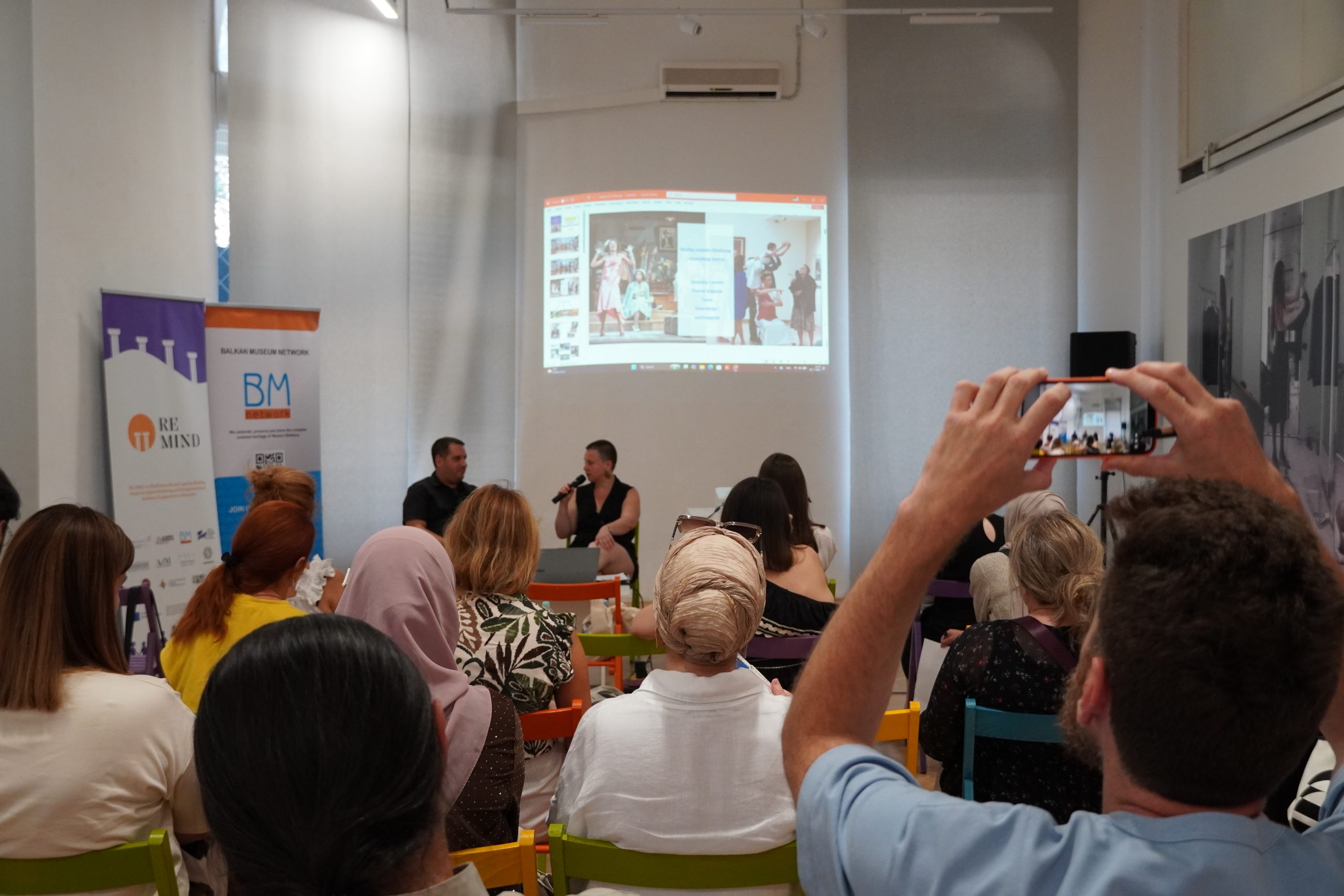
On July 18, 2026, the National Gallery of Bosnia and Herzegovina hosted a presentation on the goals, activities, and potential of “RE-MIND: A Mindfulness-Based Capacity-Building Model for Digital Wellbeing and Intergenerational Audience Engagement in Museums.” The event was organized by the Balkan Museum Network, one of the project’s partner organizations.
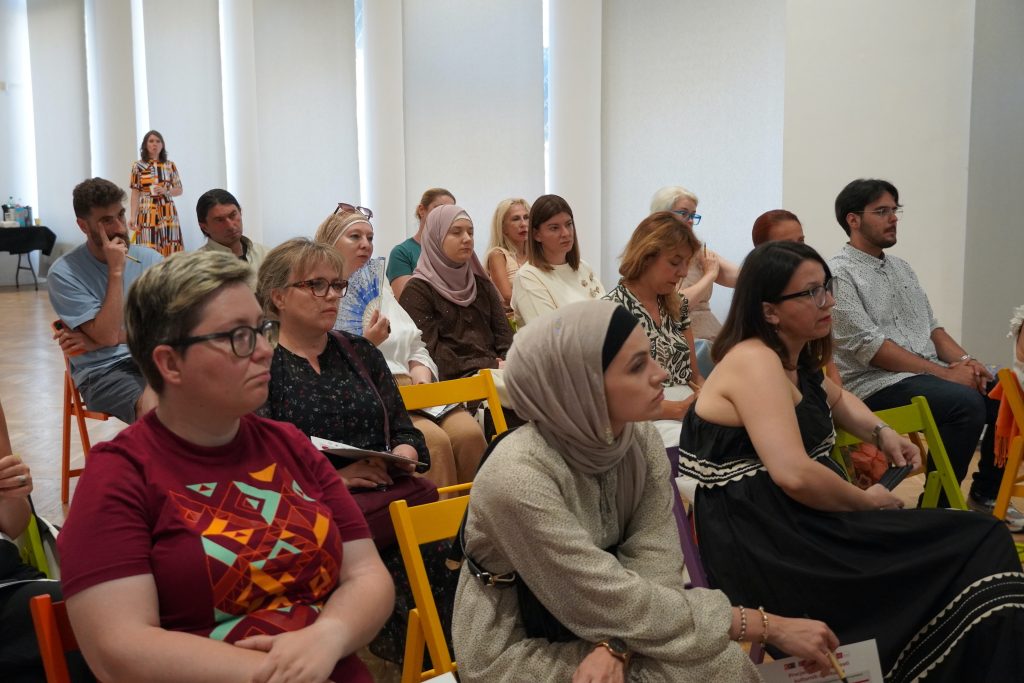
The audience included twenty representatives from different sectors, museum professionals from Bosnia and Herzegovina and the wider Western Balkans, university professors and students from information technology, art, and pedagogy, as well as cultural and tourism workers and artists. Following a welcome from The Natinal Gallery of Bosnia and Herzegovina’s Director Strajo Krsmanović, Aida Vezić, Secretary General of the Balkan Museum Network, presented the RE-MIND project in detail.
Training and Certification Opportunities
Vežić outlined the project’s core concepts: integration of two models (the models of meditative and socio-cognitive mindfulness) into RE-MIND’S approach that integrated both models, toward intergenerational engagement. This approach will be piloted experimentally in museums over the next three years through design of museum environments, museum education activities, audience engagement and other socially engaged activities.
Attendees also learned about opportunities to build professional and institutional capacity through a five-module Smart Learning Ecosystem. Museums whose leaders, designers, educators, curators, guides, and digital experts complete the training will be eligible for certification as individual museum professionals and their institution could be labeled as a Mindful Museum.
In the project’s first four months, the consortium identified and mapped 16 best practices among European museums using a variety of mindful methods. One of these is the “Youth Museum Theatre” program, developed by the National Gallery of Bosnia and Herzegovina in 2023. Participants of the event have watched a trailer for the program’s performance “Unheard Voices,” after which museum educator Aida Šarac Berbić spoke about the program’s value in engaging Gen Z audiences and engaging in intergenerational dialogue as a reflection of the performance.
Aida Šarac Berbić noted that adolescents are a challenging group to reach in a museum setting: at an age when they are searching for their own identity, many young people reject museum values as an extension of family values imposed on them. The challenge, she explained, was finding a way to connect cultural heritage collection to issues that actually matter in young people’s lives.
By pairing current issues in Bosnian and Herzegovinian society with artworks from the collection, participating youth created their own museum theatre performances. Through embodied learning, voice work, breathing, and concentration techniques, they claimed the museum as a space of personal and collective reflection — transforming the permanent exhibition from a static display into a living, performative one.
Museum Theatre as a Mindful Practice
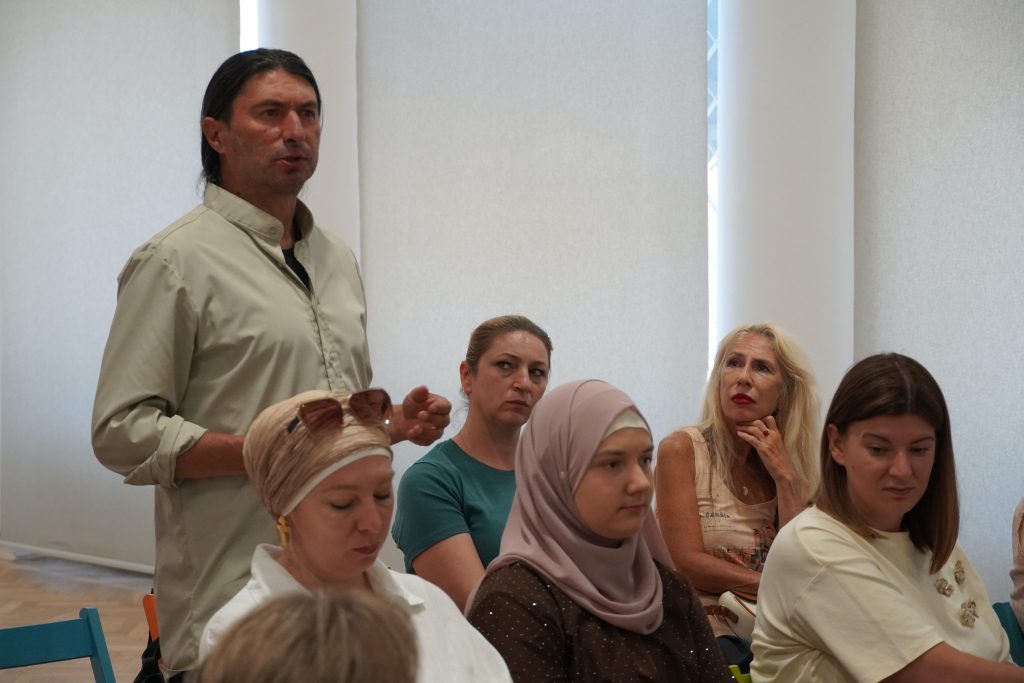
The central topic of the event was a discussion on the museum theatre model, between Dr. Dragan Kiurski, author of the book “Museum Theatre: Communication with the Audience and Heritage Interpretation”, and Aida Šarac Berbić. The conversation explored the links between mindfulness in museums and museum theatre as a tool for education, identity-building, and heritage interpretation.
Both speakers situated museum theatre within a broader shift in how museums see themselves: moving from passive repositories of heritage toward active, dynamic spaces of socialization. As museums transform, they argued, so do their visitors — museum theatre helps turn the visitor from a passive observer into an active participant in interpreting heritage.
Dr. Kiurski discussed several models of museum theatre and their respective strengths, highlighting the power of creative drama to engage Gen Z visitors and draw in their peers. The discussion also identified shared ground between museum theatre and mindfulness: embodied learning, identification, emotional engagement, self-reflection, and socialization.
The discussion on museum theatre started from the question of what museum theatre is and how it contributes to the evolution of the museum to a socially responsible institution that cares about the mental well-being of visitors in a turbulent modern age, as confirmed by recent neurological research on the impact of a quality museum experience, architectural environment and the presence of original exhibits on human well-being. In this context, the elements of museum theatre that support practices of conscious presence were considered, the way in which this method activates the visitor from a passive observer to an active participant in the process of learning and creating meaning (relying on constructivist pedagogy), and the role of meaningful socialization, emotional identification and self-reflection in strengthening connections between people. The discussion then moves on to a comparison of classical and museum theatre, with a focus on Susan Bennett’s claim that exhibitions are essentially theatrical because they represent the way museums perform the knowledge they create, as well as issues of authenticity, as museum theatre is sometimes criticized for “inventing the past” in contrast to the traditional claim for the authenticity of heritage. Topics included the potential of museum theatre for transgenerational learning given the diversity of its audience, the historical development of the practice in Europe and the US (with the example of the Metropolitan Museum of Art’s storyteller, Anne Curlee Chandler, and her thoughts on art as a storyteller of the ages), and the qualities that a good storyteller or interpreter of a museum collection should possess.
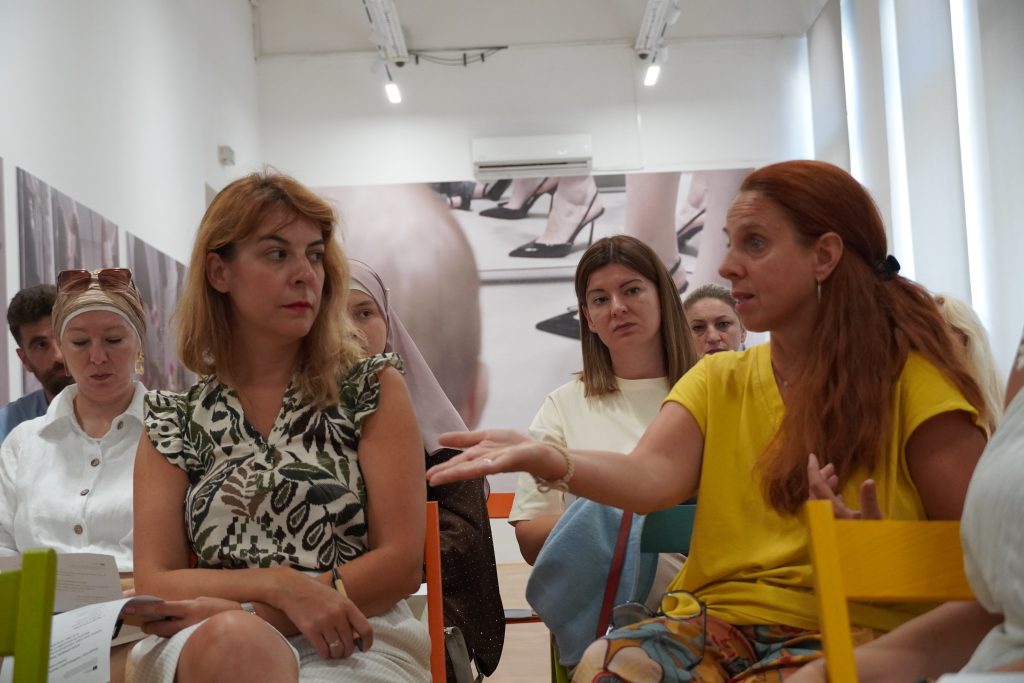
Audience members joined the conversation, with representatives from the Homeland Museum in Travnik, the Museum of Vojvodina in Novi Sad, the Museum of Sarajevo, sharing examples of museum theatre practice at their own institutions.
RE-MIND is funded by the European Union through a Creative Europe grant and brings together a consortium of 11 partners from Italy, Serbia, North Macedonia, Slovenia, Poland, Croatia and Bosnia and Herzegovina. The project launched on 1 March 2026 and will run until 28 February 2029.