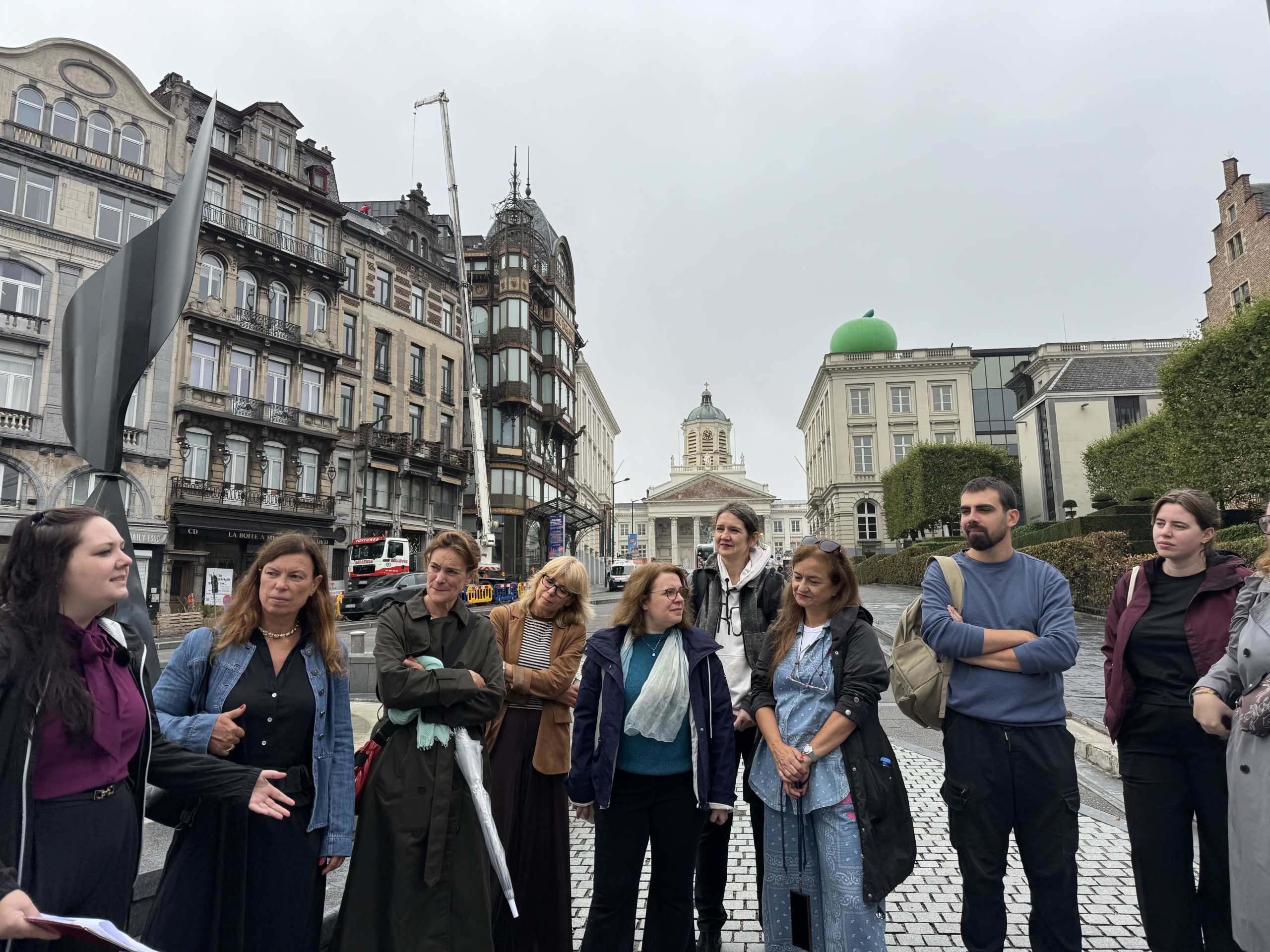
The Critical History Tours team met again on 14 September 2026 in Brussels, the capital of Belgium and also an informal capital of the European Union, to test another walking tour prepared for by the Uncomfortable Oxford team. As was the case the previous time with the tour in the Hague, Uncomfortable Oxford developed the tour based on thorough research and exploration of the city, analysis and participation in existing guided tours, interviews and consultations with local experts in the fields of tourism and heritage.
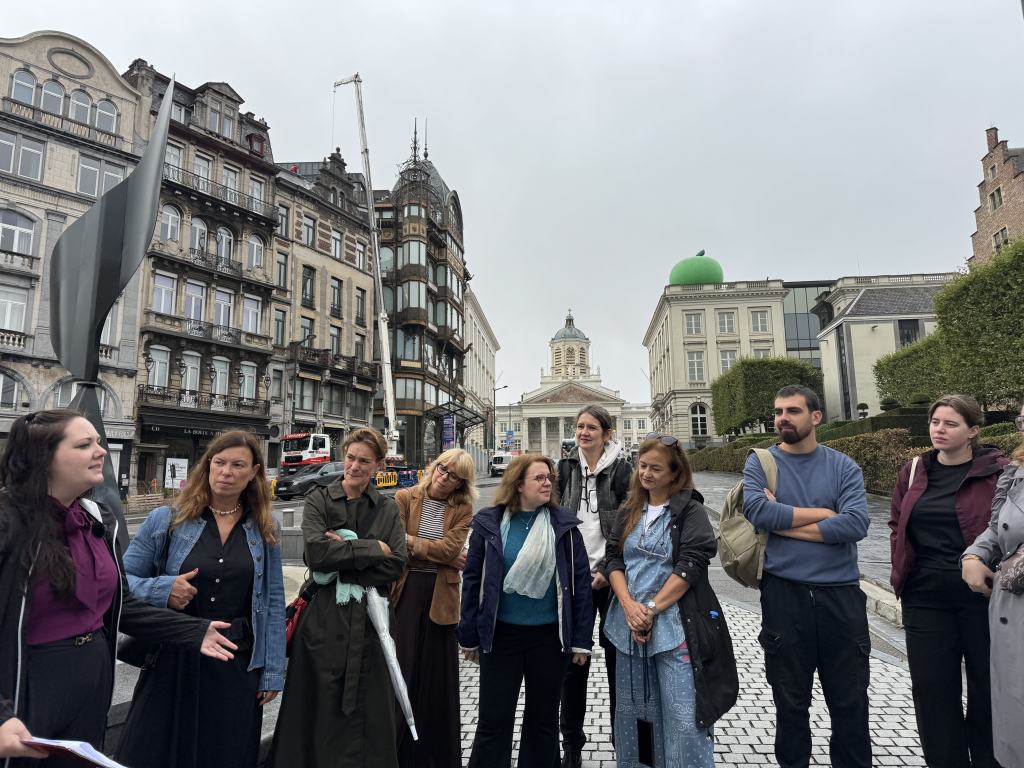
As expected, this was not a tour about “Manneken Pis,” waffles, pommes-frites, and comic books. Instead of visiting Art Nouveau buildings and old cobblestone streets in the city center, we were strolling through busy boulevards, migrant neighborhoods, and parks, looking for the stories behind the facades and for the ideas, processes, and histories that have shaped Brussels as it is today.
One of the first stops was the 19th-century monument dedicated to Godfrey of Bouillon, the famous medieval Crusader. This figure, celebrated as a national hero in the newly established state of Belgium, is a great example of the “invention of tradition” typical of 19th-century national movements. Godfrey the Crusader, the “liberator” of Jerusalem, also symbolizes a Christian concept of Europe and raises questions about the roots of European identity and its exclusiveness and inclusiveness.
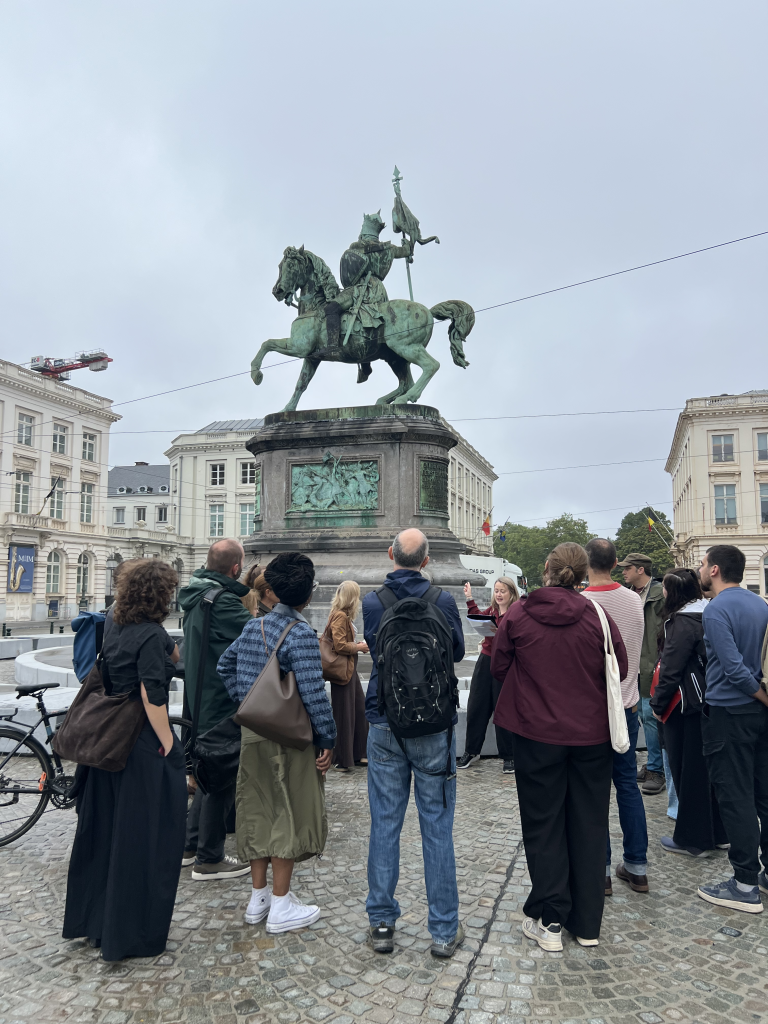
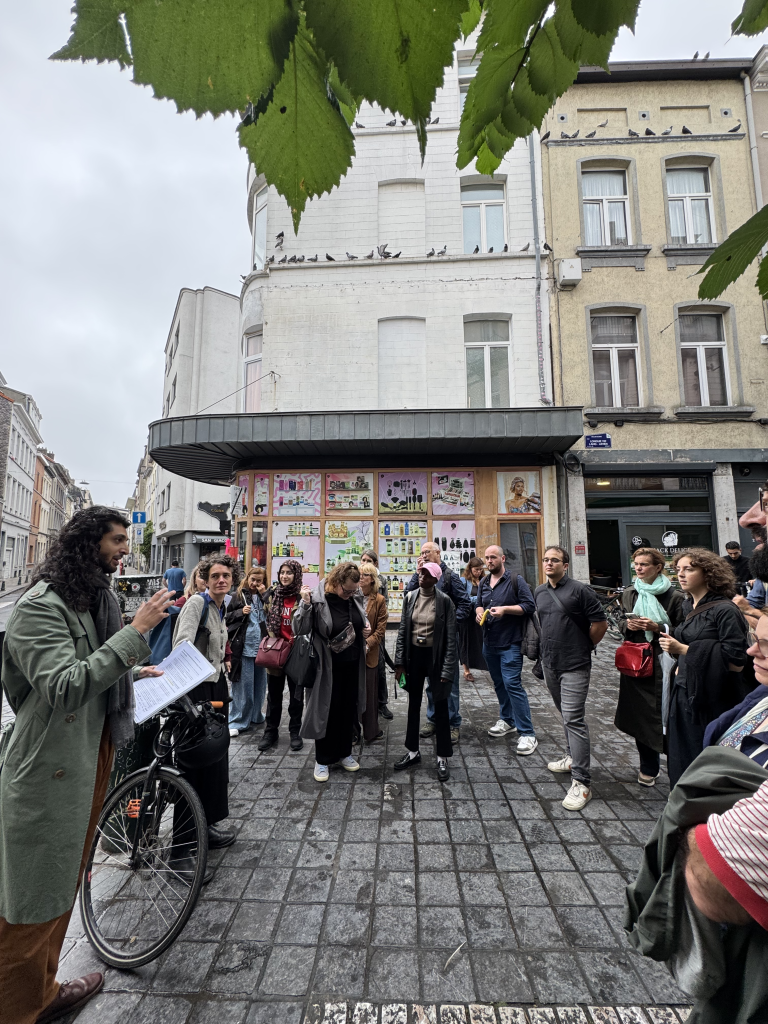
The next stop was the monument to the notorious Belgian King Leopold II, perhaps the best representative of late European imperialism and the violent exploitation of Africa and its people. This statue is today the most controversial monument in Brussels. It is constantly desecrated, as was the case during our visit in September. Quite unusually for a tourist group, we observed a moment of silence dedicated to the countless victims of Leopold’s regime in the Congo.
After Leopold II, we went to Patrice Lumumba Square, named after one of the African leaders of the anti-colonial movement as a result of a local initiative. This commendable act by the city government is diminished by the fact that the new name of the square is almost invisible, except for a small and modest plaque that informs passers-by. In response to this marginalization, the local community painted a large mural on a nearby building, offering a colorful representation of what Patrice Lumumba Square might look like in the future. The question remained open: what are the limits of local initiatives, and is the modest plaque with Patrice Lumumba’s biography and photograph merely a small concession by the city government, intended to keep everything essentially the same?
From Lumumba, we went to the next stop in the Matongé district, where a large part of the African community lives. Shops, people, street art, and the entire environment provided a good background for a discussion about Africans in Belgium, their colonial past, and their place in today’s Brussels, Belgium, and Europe.
Visiting the small park in front of the Royal Belgian Institute of Natural Sciences was a good opportunity for a short rest, but also to initiate a debate about how institutions such as museums, scientific institutes, and other collections reflect a European imperial imagination, and how even science is not neutral in its attempts to categorize, prioritize, and organize the world.
The next stop was, as expected, the European Quarter, but unexpectedly, the topic of this stop was not so much the EU but a history of Europe and Brussels from a female perspective. The cue for this stop was supposed to be the allegorical statue of Europe, but it had inexplicably been removed from its pedestal at the time of our visit. This did not stop us from discussing the complex history of women’s experiences in Europe, starting with the violent myth of Europe herself.
The tour ended in Leopold Park, in front of the House of European History. The park used to be a zoological garden in the 19th century, with animal and plant species brought there from all over the world. Some of those species did not survive the transfer to their new habitat, while others adapted and are now perceived as local, such as the Egyptian geese. This raises an important question: what can we consider European in a global and interconnected world? Is Europeanness something inherent or constructed, and could we ask the same question about Brussels?
In the end, this diverse tour by Uncomfortable Oxford left us with more questions than we had only a few hours earlier. How can descendants of colonizers and colonized people coexist in the same place, and what divides them and what keeps them together? How should we deal with controversial historical figures in public space? How unstable, constructed, and provisional are the identities of a complex city such as Brussels, and of the European Union as a whole? And what happened to the statue of Europe in the European Quarter?
Critical History Tours is a multi-partner European project that uses walking tours to engage with contested histories in public spaces and to support educators and guides in navigating sensitive and polarized pasts.
Author: Vojislav Martinov
Funded by the European Union. Views and opinions expressed are however those of the author(s) only and do not necessarily reflect those of the European Union or the European Education and Culture Executive Agency (EACEA). Neither the European Union nor EACEA can be held responsible for them.